
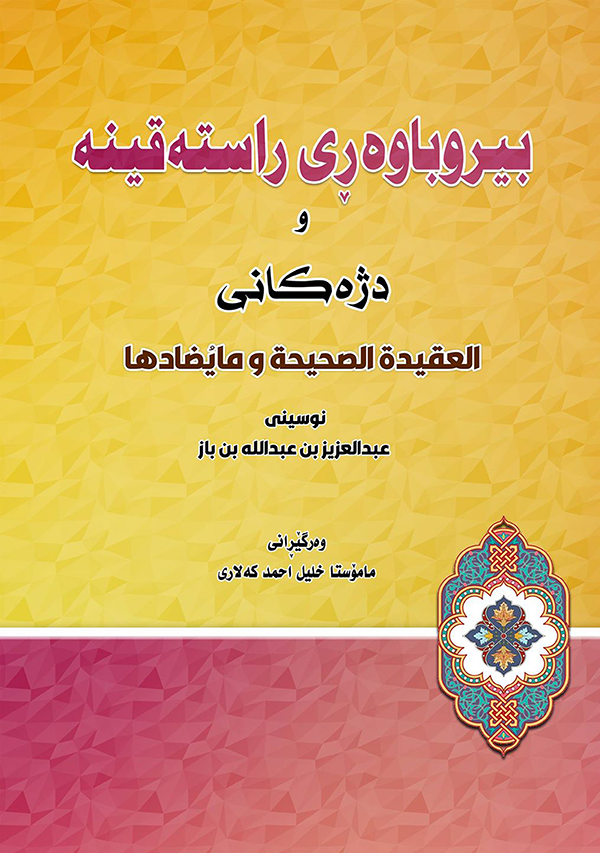
بیروباوەڕی ڕاستەقینە و دژەكانی

ناساندنی پەڕتووکی: بیروباوەڕی ڕاستەقینە و دژەكانی
| ناوی پەڕتووک: | بیروباوەڕی ڕاستەقینە و دژەكانی (العقيدة الصحيحة وما يضادها) |
| نووسینی: | شێخ عەبدولعەزیز بن عەبدوڵڵا بن باز (ڕەحمەتی خوای لێبێت) |
| وەرگێڕانی: | مامۆستا خەلیل ئەحمەد |
| بابەت: | عەقیدە و بیروباوەڕی ئیسلامی |
کورتەیەک دەربارەی پەڕتووکەکە:
پەڕتووکی “بیروباوەڕی ڕاستەقینە و دژەکانی” یەکێکە لە گرنگترین، کورتترین و بەپێزترین نامیلکە زانستییەکانی شێخ ئیبن باز لە بواری عەقیدەدا. نووسەر لەم بەرهەمەیدا بە شێوازێکی زۆر ئاسان و ڕوون، بنەماکانی بیروباوەڕی ڕاستەقینەی ئەهلی سوننە و جەماعە (بنچینەکانی ئیمان) ڕوون دەکاتەوە و تیشک دەخاتە سەر ئەو هاوبەشدانان (شیرک) و بیدعانەی کە دژایەتی ئەم بیروباوەڕە پاکە دەکەن.
گرنگترین تەوەرەکانی نێو پەڕتووکەکە:
- شیکردنەوەی پایەکانی ئیمان: باسی وردی پایەکانی ئیمان (ئیمان هێنان بە خودا، فریشتەکان، پەڕتووکەکان، پێغەمبەران، ڕۆژی دوایی، و قەزا و قەدەر).
- ناسینی حەقیقەتی تەوحید: ڕوونکردنەوەی تاکو تەنهایی خودا لە پەرستش، پەروەردگارییەتی، و ناو و سیفاتەکانیدا.
- ئاگادارکردنەوە لە شیرک و بیدعە: دەستنیشانکردنی ئەو بیروباوەڕە چەوت و هاوچەرخانەی کە مرۆڤ لە بازنەی ئیسلام یان لە بیروباوەڕی ڕاستەقینە دوور دەخەنەوە.
دەربارەی وەرگێڕانی کوردی:
ئەم بەرهەمە بەنرخە لەلایەن مامۆستا خەلیل ئەحمەد-ەوە وەرگێڕدراوەتە سەر زمانی کوردی. وەرگێڕ هاتووە بە زمانێکی پاراو، سادە و نزیک لە تێگەیشتنی خوێنەری کورد دەقە عەرەبییەکەی گواستووەتەوە، بە شێوازێک کە بۆ گشت چین و توێژەکانی کۆمەڵگە گونجاو بێت و خوێنەر بە ئاسانی لە مەبەست و قووڵایی وتەکانی شێخ ئیبن باز بگات.
ئەم پەڕتووکه ڕێبەرێکی بنەڕەتی و پێویستە بۆ هەر مسوڵمانێک کە دەیەوێت بناغەی بیروباوەڕی خۆی لەسەر قورئان و سوننەت بەپێی تێگەیشتنی پێشینانی چاکی ئوممەت (سەلەفی ساڵح) دابڕێژێت.
>
Book Introduction
Correct Belief and Its Opposites is a Kurdish edition of a work by Abd al-Aziz ibn Abdullah ibn Baz, translated by Khalil Ahmad. The existing catalog description identifies its subject as Islamic creed and connects it with the foundations of faith. The book introduces the author’s understanding of those foundations and discusses beliefs or practices that he regards as inconsistent with them.
The earlier introduction identifies the pillars of faith and the concept of tawhid among its principal concerns. These terms are closely related but have different functions within a discussion of belief. Readers can use the book to understand how the author defines them and how he supports his explanations with religious texts.
A careful reading separates definition, evidence and application. Understanding a general religious concept is not the same as determining how every individual case should be judged. Keeping that distinction visible helps readers engage with the material as a study of creed rather than using short passages to make unsupported judgments about other people.
The Kurdish translation is relevant to readers beginning a structured study of Islamic belief and to those comparing explanations of important religious terms. Making a glossary of repeated concepts and consulting the cited passages in context can improve understanding. The introduction presents the work’s subject and viewpoint without claiming that a brief summary replaces the book itself. Its value is in offering an accessible route into the author’s explanation and encouraging deliberate study of the sources on which that explanation depends.


Reviews
There are no reviews yet.